Showing posts with label Lee Farkas. Show all posts

Tuesday, April 19, 2011

ColonialPalooza: Farkas GUILTY on all counts; what it means going forward

Breaking news by Suevon Lee, the Ocala Star-Banner reporter who has been covering this story from Day One:


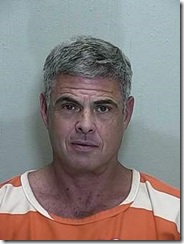
image According to Peter Carr, a spokesman for the U.S. Attorney's Office for the Eastern District of Virgina, the verdict was returned 5 p.m. Tuesday, after a full day and a half of deliberations that began Monday afternoon at the conclusion of a 10-day trial at the federal courthouse here.

A sentencing date is also being set for Farkas, 58, who faces up to 30 years in prison on each count when he appears before U.S. District Judge Leonie M. Brinkema on a future date.

In what prosecutors have described as the “largest and longest running fraud scheme in the country,” Farkas, with the help of several co-conspirators, was accused of selling fake loan assets to Colonial Bank, once one of the country's largest, and diverting funds from a company-owned financing vehicle to help cover Taylor Bean's operating expenses.


In response to comments, emails and tweets:

Farkas’ conviction may or may not have any impact on whether the feds decide to pursue senior officials at Taylor Bean’s partner, Colonial Bank. Colonial officials have already acknowledged that they are the target of an ongoing federal probe into potential banking and securities irregularities.

Also, both Colonial and Taylor Bean are in Chapter 11 Bankruptcy, a process that should result in final liquidation of those two companies’ remaining assets sometime this summer. A great deal of evidence is behind the shield of attorney-client privilege in those cases. In fact, Farkas’ own defense team sought to compel the release of those documents before the trial began, claiming that they could contain information needed for his defense. It’s a fair assumption that these materials will no longer enjoy that privilege once the bankruptcy proceedings have run their course.

Could they be used to advance the ongoing federal probe and result in criminal indictments? Perhaps. There’s also a chance that the evidence could be exculpatory for Farkas, giving him ammunition as his case winds through the appeals process.

There’s still a lot of intrigue left.

Follow me on Twitter and Facebook, and visit the Timeline Page for a complete chronology of events (Which I SWEAR I will update as soon as I get off the road this week. No, really. I PROMISE).

Saturday, April 16, 2011

ColonialPalooza: Lee Farkas’ testimony concludes with no smoking gun

image Lee Farkas spent nearly five hours on the stand Friday, defending himself against federal charges that he directed a $1.9 billion scheme to sell phony loans to Colonial Bank, diverted funds out of short-term financing arm Ocala Funding LLC, and defraud the US TARP program.
To our dismay, he did not deliver any smoking gun, directly linking any of the senior managers or directors of Colonial BancGroup to the massive fraud scheme that toppled both the bank and Taylor Bean & Whitaker, the mortgage giant Farkas grew into the largest non-depository lender in the country.

As noted here yesterday, Farkas did testify that the check kiting scheme was authorized by the Montgomery-based bank.


So far, Farkas has claimed that "Plan B", which prosecutors allege was a way to sell Colonial hundreds of millions of dollars in "fake" loans, was the brainchild of Cathie Kissick, the head of Colonial's Orlando-based Mortgage Warehouse Lending Division, whom he first met in the mid-1990s before Taylor Bean exploded into the mortgage lender it became.

"She was very creative in ways to come up with ways for us to fund more loans," he said.

As for the overnight sweeping, which prosecutors claim was funneling money from Taylor Bean's investor funding account into its master account at Colonial, allegedly to help cover operating expenses at the company, Farkas said this all happened under someone else's direction.

"It was someone at Colonial who had authority to make those transactions at the time," he said, adding he sent an internal team from Taylor Bean to "investigate" these overdrafts but never received an explanation that met his level of satisfaction.


He also clearly believed that federal investigators were examining Colonial’s activities during the failed attempt to secure TARP funding, and the prosecution appeared to stipulate that belief by providing jurors with an August 2009 recording of a conversation:


[Sean] Ragland's testimony followed statements from Desiree Brown, Taylor Bean's former treasurer. The jury heard a tape recorded conversation between Brown and Farkas on Aug. 4, 2009, a day after FBI agents raided Taylor Bean's Ocala headquarters and Colonial Bank's Mortgage Warehouse Lending Division in Orlando.

"The only thing they're looking at is Colonial and nothing else," Farkas tells Brown on the recorded call, in reference to the bank's failed efforts to receive TARP funding.


There are about 732 different lines of speculation as to why the prosecution didn’t delve deeper into this relationship and entangle the highest levels of senior management at Colonial, especially after noting that Farkas was allegedly conspiring with a “Senior BancGroup Officer” until nearly the last day before the raids on offices in Florida.

Here’s one line of speculation: Doing so would have provided the Farkas defense an avenue towards establishing reasonable doubt and risking an acquittal.

As to why the defense didn’t take that path on its own… It’s anybody’s guess as to why, on the stand, Farkas didn’t point to Montgomery, Alabama and exclaim “he did it! I’m innocent!” Why not enter testimony and documentary evidence showing the intense and excrutiatingly detailed control the Micromanager exercised over his empire? It appears to be a missed opportunity, and it may result in Farkas’ conviction. Does that mean Bobby Lowder escapes with his skin intact?

Hardly.

In its bankruptcy filings,  Colonial has acknowledged that it is the subject of Dept of Justice criminal probe into to its mortgage warehouse lending division and alleged accounting irregularities. At the minimum, Colonial executives face jeopardy under the Sarbanes – Oxley Act. Colonial’s assets are set to be liquidated in Chapter 11 proceedings in the following months. When that’s done, a ton of documents and other evidence will emerge from behind the shield of attorney-client privilege and the picture will  become much clearer.

Farkas’ defense team sought to speed that emergence process in pre-trial motions to compel access to those documents, but the motion was denied. Perhaps that’s why the Farkas team opted not to raise the matter during trial. It could be fodder for appeal should Farkas be convicted.

Stay tuned. There is still a long way to go.

Follow me on Twitter and Facebook, and visit the Timeline Page for a complete chronology of events.

Friday, April 15, 2011

ColonialPalooza: Yes, Farkas is on the stand today

Update to an earlier post. Scroll down for updates.

image "It is always the defendant's choice," says his attorney, William Cummings.

It’s usually a train wreck when the accused takes the stand in his own defense because it opens him up to cross-examination by the prosecution. But in this case, Farkas may have no choice. The prosecution has paraded a slew of his former employees and business associates, who’ve outlined an extravagant lifestyle and inner circle fringe benefit spending that would make Fiesta Bowl executives envious.

The prosecution rested Thursday. The defense began its case Thursday with three witnesses: two former Taylor Bean employees and an Atlanta-based Accountant who testified that Colonial received as much as $20 million more than was withdrawn in the allegedly fraudulent transfers.


In her testimony later Thursday afternoon, Karen Fortune, the defense expert witness, said according to her analysis, Colonial, as the result of all these transfers, received back more than $20 million in cash than it advanced to Taylor Bean.

She acknowledged on cross-examination, however, that her job was not to make any evaluation as to the validity of the transactions, just assess the amounts Colonial had advanced and ultimately received back.

"It's not your testimony here that, as long as Colonial makes money, crime pays, is it?" Assistant U.S. Attorney Charles Connolly posed to the witness.


Developments throughout the day. Suevon Lee, the Ocala Star-Banner reporter covering the trial should have an update on whether he takes the stand.

Getcha some popcorn, because there's another big fish swimming around out there that the government would like to get the straight skinny on, and Farkas almost certainly has the goods.

UPDATE: As expected, Mr. Farkas is indeed on the stand.


So far, Farkas has claimed that "Plan B", which prosecutors allege was a way to sell Colonial hundreds of millions of dollars in "fake" loans, was the brainchild of Cathie Kissick, the head of Colonial's Orlando-based Mortgage Warehouse Lending Division, whom he first met in the mid-1990s before Taylor Bean exploded into the mortgage lender it became.

"She was very creative in ways to come up with ways for us to fund more loans," he said.

As for the overnight sweeping, which prosecutors claim was funneling money from Taylor Bean's investor funding account into its master account at Colonial, allegedly to help cover operating expenses at the company, Farkas said this all happened under someone else's direction.

"It was someone at Colonial who had authority to make those transactions at the time," he said, adding he sent an internal team from Taylor Bean to "investigate" these overdrafts but never received an explanation that met his level of satisfaction.


Who within the Colonial inner circle would have had sufficient authority to ok a check kiting scheme that rose into the ten-figure range, generating gobs of cash in overnight interest fees?

Follow me on Twitter and Facebook, and visit the Timeline Page for a complete chronology of events.


Friday, April 8, 2011

ColonialPalooza: “I felt powerless to stop it.”

image Former Colonial Senior Vice President Catherine Kissick told jurors yesterday that she felt powerless and had no choice but to continue going along with an ever growing fraud that ended up toppling the largest non-depository mortgage lender in the United States and wrecked the once mighty banking empire founded and run by Auburn University megatrustee, Bobby Lowder.

Kissick was testifying in the the trial of Lee Farkas, former CEO of Taylor Bean & Whitaker. TBW had become Colonial’s largest mortgage lending customer of the financial giant’s warehouse loan business.  Colonial financed billions in mortgages originated by TBW, many worthlessly toxic mortgages that were later packaged and sold to Fannie Mae and Freddie Mac. But financial difficulties at TBW were hidden in an elaborate, multimillion dollar check kiting scheme until the banking crisis brought such intense pressure that the scheme was impossible to continue.

Prosecutors also allege that Farkas, working in close concert with a “senior Colonial BancGroup officer” concocted a second scheme to defraud the United States’ Troubled Asset Relief Program out of hundreds of millions. Had the scheme gone undetected, Colonial Bank would have received a massive infusion of capital that may have allowed both firms to survive the crisis. However, federal authorities uncovered the scam, raided TBW and both companies fell into bankruptcy in the summer of 2009.

In another development, the Farkas defense team has won its battle to gain access to documents and email evidence flowing between Colonial and attorneys at Akerman Senterfitt LLP. Via Law360.com (subscription required), Farkas’ attorneys said the needed the evidence to bolster their defense, and that the preparation of Farkas’ defense had been hampered by those documents being placed behind the shield of attorney client privilege.

It’s a win for Farkas and a loss for Colonial and especially for Bobby Lowder, who most believe is the “Senior Colonial BancGroup” official that the government claims Farkas was conspiring with, right up until the day the FBI raided offices, carted off boxes, and padlocked doors.

Follow me on Twitter and Facebook, and visit the Timeline Page for a complete chronology of events.

Wednesday, April 6, 2011

Colonial Palooza: Farkas Trial continues, and Lee gets bad news

It was Day #3 in the Lee Farkas trial, where the former Taylor Bean & Whitaker CEO is being tried on multiple counts of bank, wire and securities fraud in Alexandria, VA. Reporter Suevon Lee continues to provide coverage of the case.

The star witness today was former Colonial executive Teresa Kelly, who explained to the jury how TBW and Colonial executives perpetrated a fraud that brought down the once-mighty Colonial BancGroup and TBW, which was once the nation’s largest non-depository mortgage lender.

In another development, Farkas got some bad news as the trial began this week. He had earlier filed a motion to exclude expert testimony. His attorney had argued that witnesses the government had identified as “experts’ were actually three senior managers from Freddie Mac and Ginnie Mae.

William Cummings, Farkas’s defense lawyer, argued that the government was trying to “disguise” these witnesses as “lay” experts in order to get around tighter disclosure standards.

In criminal trials, expert witnesses have greater latitude to testify to their opinions on subject areas of their expertise.

That motion was denied.

image

This almost certainly forces Cummings to put his client on the stand, and who knows what happens then. A defense lawyer never wants his client under cross examination, and neither does anyone else who may (or may not) be an unindicted co-conspirator. Especially if the defendant on the stand is trapped and has damning information on someone else.

It’s a dumpster fire. You never know what’s gonna blow or who it’s gonna burn.

The government has never identified the “Senior Colonial BancGroup Official” who, almost until the last day, was allegedly in constant communication with Farkas and other TBW executives about the fraudulent TARP application.

I won’t blog this trial daily, as I’m much too far away and depend on the media and court resources to keep up with it. I will however, keep readers posted on significant developments on this and other cases surrounding a curious group of individuals from central and east Alabama.

Stay tuned, sports fans. It’s gonna be a busy spring and summer.

Follow me on Twitter and Facebook, and visit the Timeline Page for a complete chronology of events.


Tuesday, April 5, 2011

ColonialPalooza: Farkas Trial, Day 2

image April 5 (Bloomberg) -- The former president of Taylor, Bean & Whitaker Mortgage Corp., Raymond Bowman, said ex-Chairman Lee Farkas ordered data sent to Colonial Bank for nonexistent loans in an effort to cover up the company’s growing deficits.

Bowman, 45, testifying in federal court in Alexandria, Virginia, today for the government, said Farkas in 2003 explained that the sale of “dummy” loans, known as Plan B, were necessary to prevent Taylor Bean from going out of business.

“I told him I didn’t think it was a good idea,” said Bowman, who pleaded guilty last month to conspiracy and making false statements. Bowman said he thought the plan was unethical and “possibly illegal.”

Read the rest here.

Suffice it to say that if the CEO of Taylor Bean was running things on his side of the scheme, the micromanager and CEO of Colonial BancGroup was running things on the Montgomery side.

Follow me on Twitter and Facebook, and visit the Timeline Page for a complete chronology of events (I’m updating tomorrow, I promise!).

ColonialPalooza: Chief Financial Officer Sarah Moore on the stand

image The Ocala Star-Banner’s Suevon Lee is in Alexandria, reporting on the trial of Lee Farkas, the man prosecutors say was the chief architect of a nearly $2 billion fraud scheme between his former company, Taylor Bean & Whitaker, and executives at Colonial BancGroup.

As the nation’s financial crisis worsened, both companies failed and toppled Bobby Lowder’s banking empire. Five former executives of the two firms have already pleaded guilty.

The government’s first witness is former Colonial CFO Sarah Moore.  Her testimony is expected to be a key part of the prosecution’s case.

CORRECTION: the sentence above has been revised to correct a typographical error in the first version of this post. Ms. Moore has not pled guilty to any crime, nor has she been charged with one.  We regret the error and apologize to Ms. Moore.


TARP, the Troubled Asset Relief Program, is a federal program to buy assets and equity from financial institutions to strengthen the financial sector. It was part of the government's measures in 2008 to address the subprime mortgage crisis.

Sarah Moore, the former chief financial officer of Colonial, was the government's first witness. She said an application for TARP funds had been filed with the Federal Deposit Insurance Corp. and other regulators. Along with the application were balance sheets listing supposedly worthless assets.

"If a bank employee and a bank customer are working together, it's very difficult to find errors or omissions [on a financial filing]," Moore said. "A customer is typically a check on a bank and a bank employee is a check on the customer. If these two are working together, it makes it very difficult to find any issues."


The trial is expected to last about three weeks.  Moore continues her testimony today.

Follow me on Twitter and Facebook, and visit the Timeline Page for a complete chronology of events.


Saturday, April 2, 2011

ColonialPalooza: Farkas seeking to bar testimony from Ginnie Mae and Freddie Mac “experts”

image It was a busy news week, so please excuse the tardy nature of this report.  Earlier this week, former CEO of Taylor Bean & Whitaker Lee Farkas sought to bar the government from using executives of Ginnie Mae and Freddie Mac as expert witnesses in his upcoming trial on charges of bank, wire and securities fraud.

Jury selection in the trial is scheduled to begin Monday in Alexandria, VA before US District Judge Leonie Brinkema.


Farkas’s legal team wants to exclude the testimony of several potential government witnesses, among them three senior managers from Freddie Mac and Ginnie Mae. Taylor Bean bundled mortgages into securities and sold them to investors such as Freddie Mac. Many of those mortgages were guaranteed by Ginnie Mae.

William Cummings, Farkas’s defense lawyer, says the government is attempting to “disguise” these expert witnesses as “lay” witnesses in order to circumvent heightened disclosure standards. In criminal trials, expert witnesses have greater latitude to testify to their opinions on subject areas of their expertise.

…

“In addition, because of this reality, he will be forced to take the stand in his defense thus infringing on his constitutional right against self-incrimination,” Cummings said in court papers.

All things being equal, Cummings said, he’d prefer that Farkas not testify.

“As a criminal defense lawyer, the general rule of the thumb is to keep the client off the stand,” Cummings said in an interview Thursday.

…

Cummings has repeatedly sought to slow down the pace of the proceedings to little avail. In recent weeks, a number of defendants—Taylor Bean’s former president and treasurer, as well as the former head of Colonial Bank’s mortgage warehouse lending division—have pleaded guilty to criminal charges connected to the scheme. Colonial, an Alabama bank that collapsed in 2009, was Taylor Bean’s main lender and provided the company with $3 billion in mortgage financing.


In the media coverage of the plea agreements, Cummings admitted that the government has approached him with the possibility of a plea agreement, but Cummings says nothing has been formalized and no agreement has been reached. Without such a deal, Farkas faces the prospect of spending the rest of his life in the federal lockup if he’s convicted of the 16 charges against him.

Farkas is a “big fish,” and prosecutors are less willing to make a deal with such a high profile target. That is, unless the “big fish” can help them indict and convict an even bigger fish.

As noted here last month,  there haven’t been a lot of convictions or guilty pleas regarding the billions of dollars worth of alleged fraudulent applications for relief under the US’ Troubled Asset Relief Program (TARP). There have been a few successes and a few disappointments, and  political pressure is growing to get a scalp from someone sitting at the top of the financial institutions that ultimately failed. The problem is that many of the top executives most often mentioned as TARP money miners are Wall Street executives who have poured millions into political campaigns for federal offices over the last several cycles.

Cummings might be making a good decision for his client, but hurting the chances of getting to some of the targets much higher up the food chain. There has been plenty of ink and bandwidth spent on exposing the Government Sponored Enterprises (GSE’s) wheeling and dealings. Getting these people on the stand—even as expert witnesses—might give Cummings the chance to put these people on the spot.

Farkas knows what these people were doing.  Farkas knows what Bobby Lowder was doing, too. The question is not whether the government really wants Farkas’ scalp, but whether they’re willing to “go there” and make a deal with him in order to get Lowder and get the execs at GNMA, FNMA and FHMC. Maybe the former. The latter, maybe not so much.

Follow me on Twitter and Facebook, and visit the Timeline Page for a complete chronology of events.


Wednesday, February 23, 2011

ICYMI: Mortgage executive with ties to Colonial Bank failure will plead guilty

In Case You Missed It® yesterday, news hit the afternoon wires that former Taylor Bean & Whitaker executive Desiree Brown will plead guilty in a special hearing set for 9:30 am Thursday, February 23. Brown was once the Treasurer of the failed Florida mortgage banking giant that went under in August 2009 and took the mighty Colonial BancGroup with it.

(ed. note) In response to numerous emails PM’s and Tweets: Yes, this is a huge development. While it wasn’t unexpected, the timing is interesting as Farkas is scheduled to stand trial in six weeks on charges of bank and wire fraud. But most importantly As Taylor Bean’s Treasurer, Ms. Brown had to account for every nickel of the company’s transactions with Colonial, and as discussed below, those transactions led to billions of losses and ultimately led to a colossal bank failure.

From the Reuters story that first broke the news:


* Filings say ex-treasurer received over $1.5 million

* Brown due in court Thursday for plea agreement hearing

By Jeremy Pelofsky

WASHINGTON, Feb 22 (Reuters) - The former treasurer of the now-defunct Taylor, Bean & Whitaker Mortgage Corp, Desiree Brown, is set to enter a plea agreement to federal criminal charges on Thursday, according to court records released on Tuesday.

No details of the criminal charges were available but U.S. Judge Leonie Brinkema has scheduled a hearing for 9:15 a.m. (1415 GMT) on Thursday in the U.S. District Court for the Eastern District of Virginia. Such hearings are typically held when a defendant is expected to plead guilty.

Taylor, Bean & Whitaker filed for bankruptcy in August 2009 and federal prosecutors have accused the former chairman of the mortgage firm, Lee Farkas, of orchestrating a scheme that led to billions of dollars in losses that are still being tallied.


It’s worth noting that Court authorization for the Title III wiretaps—the recordings that are now the central body of evidence in the BingoGate case—also came from the U.S. District Court for the Eastern District of Virginia. But I digress…

Taylor Bean was the largest non-depository mortgage lender in the country when it went belly up nearly two years ago. The company was also Colonial BancGroup’s largest “mortgage warehouse” customer. Mortgage warehousing was a common practice in the period just before the credit market meltdown, wherein depository banks such as Colonial made short term loans to mortgage originators.

The originators then lent to homebuyers and refinancing homeowners, including huge numbers of subprime borrowers. The loans were then packaged and sold to Fannie Mae, Freddie Mac and Ginnie Mae. The warehouse borrower then repaid the loans (with interest and certain transactions fees) and the cycle began again.

In its indictment of Taylor Bean’s CEO Lee Farkas, and in accompanying court documents filed by the Securities and Exchange Commission, federal authorities allege that Taylor Bean executives conspired with as yet unnamed “senior Colonial BancGroup executives” to run a check kiting scheme that was so large it would make EF Hutton blush. But the feds also allege that Taylor Bean executives conspired with—or at least acted with the knowledge of—those same executives to defraud the US’ Troubled Asset Relief Program to the tune of hundreds of millions of taxpayer dollars.

Regulators discovered the sham TARP operation and Colonial never received a bailout. In August 2009, federal authorities raided Taylor Bean’s offices and collected scores of boxes of documents.  The company filed for bankruptcy shortly thereafter, and Colonial BancGroup followed suit days later, setting up the worst bank failure in 2009 and the sixth largest in US history.

Colonial BancGroup officials have publicly acknowledged that they are the target of a federal criminal probe into possible bank and wire fraud. Indictments are widely expected, but there is no timetable for when those might come down.

Exit question: Micromanagers who make personal phone calls on $50,000 loans that are 15 days past due usually know when hundreds of millions are being moved around in elaborate shell games, don’t they?

Follow me on Twitter, and Facebook and visit the Timeline Page for a complete chronology of events.