Showing posts with label Vaping. Show all posts

Friday, October 11, 2019

Vague lung disease warnings are set to hurt far more people than they help

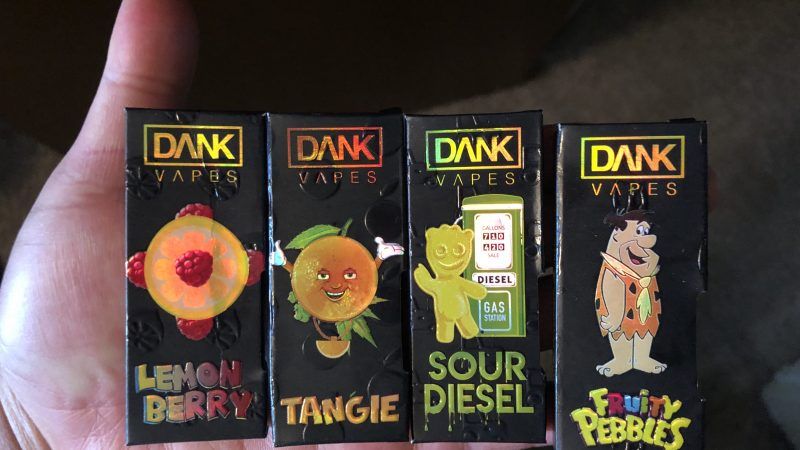
Dank-Vapes-dab-connection

I know from this blog's traffic reports that this subject is not high interest. A few hundred pairs of eyes might read this through. But when I see our government geniuses about to make a costly mistake, and I kinda sorta know a little about the subject, I am compelled to blog about it. It might save a life (like vaping has saved mine).

Chances are good that you know a smoker. Chances are also good that your smoker wants to quit and has tried almost everything from patches to (nasty) gum to maybe even psychoactive prescription drugs. And nothing worked.

Regardless of whether you are know a smoker, you'd have to be a hermit to not know about CDC and FDA and their scary drumbeat on vaping. I'm here to tell you that the feds and the media are being irresponsible and what they're doing is deadly dangerous.

From Reason Magazine:
When there's an outbreak of food poisoning, the federal government does not issue general advisories about the hazards of eating. It tells people which products have been implicated so they can adjust their behavior to reduce the risks they face.

Yet for months now, even as evidence mounted that vaping-related lung diseases overwhelmingly involved black-market cannabis products, state and federal officials have been vaguely and unhelpfully warning us about the hazards of "vaping" and "e-cigarettes." That approach has endangered public health by failing to give consumers a clear heads-up and by implying that legal, nicotine-delivering e-cigarettes, which can save smokers' lives by dramatically reducing their exposure to toxins and carcinogens, might instead kill them.

A recent study by the Centers for Disease Control and Prevention (CDC), based on interviews with 86 vapers treated for respiratory symptoms in Wisconsin and Illinois, found that 87 percent "reported using e-cigarette products containing THC." Since people may be reluctant to admit illegal drug use, the researchers noted, the actual prevalence of THC vaping among patients may be even higher.
"It seems there's too much conflating these tragic lung injuries with store-bought brands of regulated, legal e-cigs like Juul and NJOY," said former FDA Commissioner Scott Gottlieb.  "There's far too little blaming THC, CBD, and bootleg nicotine vapes where the only available hard evidence points."

E-cigarettes don't contain any tobacco and there is no combustion. They are far less dangerous than the conventional cigarettes, cigars and pipes.

The message being sent is that all vaping products are deadly because a small number of adventurous idiots are using the devices for illicit purposes. Cars are dangerous when misused. So are firearms. Sharp knives. Scissors, even. A No. 2 pencil can be deadly.

Yet people are being convinced that trying e-cig technology to quit smoking may be worse than actually smoking. Your smoker is scared to death and for no good reason. This isn't just bad policy. It's negligent.

"There's no question public health would benefit dramatically if everybody switched completely to e-cigarettes," Abrams said. "If we lose this opportunity, I think we will have blown the single biggest public health opportunity we've ever had in 120 years."

But wait... there's more.

If you ban or tax something very heavily, guess what happens in an exchange economy?
Minnesota is poised to join the panic-driven crusade against vaping, a move that's guaranteed to drive even more business through well-established smuggling channels.

In Minnesota, as elsewhere, cigarette smuggling is well established. In a 2012 article, Tax Foundation economist Patrick Fleenor traced the black market import of smokes right back to the imposition of a tax in 1947.

"By the mid-1950s, official figures show, the sale of legal, tax-paid cigarettes had plunged 20 percent below the national level," Fleenor wrote. "Frustrated by the inability to collect the taxes due, the state's chief cigarette tax administrator quipped that 'even the attorneys who come into my office are smoking untaxed cigarettes.'"
Folks, the primary cause of this alleged "epidemic" is a proliferation of black market street juice. The black market in this stuff exists because of state and local bans on legit juice and devices. If you tighten the bans or raise the taxes, all you do is create more black marketeers.

Have we learned nothing from Prohibition and the War on Drugs?

Sunday, September 22, 2019

Seeing through the cloud of media and political hysteria


It's been hard to miss the nearly nonstop hysteria and political pearl-clutching in the media recently. About 500-600 people have been sickened by misusing electronic cigarette technology and tragically, a handful have died of stupidity.

The national media, along with the usual suspects in the anti-nicotine & tobacco Nazis have seized on the fear, uncertainty and doubt to scare smokers away from vaping. Local media have fallen right in lockstep.

They can't see the smoke through the cloud.

if you’re a smoker or you know or love someone who smokes, please take a few minutes to read on.

Cigarette smoking is the leading cause of preventable disease and death in the United States, accounting for more than 480,000 deaths every year, or about 1 in 5 deaths.

In 2017, 14 of every 100 U.S. adults aged 18 years or older (14.0%) currently smoke or very recently had smoked cigarettes. This means an estimated 34.3 million adults in the United States currently smoke and at least 16 million Americans live with a smoking-related disease. Millions more have close friends or family members who smoke.

Smoking is big money in this country. With big money comes taxation. The U.S. government collects about $12 billion federal tobacco tax revenues, but receipts are declining. State and local tobacco taxes also rake in tens of billions in revenue, but their receipts are also declining.

Tobacco tax receipts are declining because fewer people are smoking. Smokers are dying, there are fewer new smokers each year, and current smokers are smoking less or quitting altogether.

But some very powerful special interests don’t want you to have access to a technology that 11 million Americans are using to reduce tobacco harm and quit smoking. The media sells it for them, paying for the air time with ads from Pfizer Pharmaceutical and Glaxo.

Just 10 years ago, vapers numbered in the hundreds. There are now tens of millions worldwide and the number is growing.

The market potential for the vaping industry is not good—while the industry has seen rapid growth from 2007 through 2019, the pool of current smokers dwindles each year, according to the CDC. As more e-cig makers enter the market, competition for a shrinking customer base will be fierce. This means prospective butt kickers will almost certainly see both rapidly advancing technology and shrinking prices.

The vaping industry has some very large and powerful opponents in the U.S. Vaping is growing because people who want to quit smoking want options. Options that don’t include pharmaceuticals and methods sold by tobacco companies are understandably very popular among current adult smokers.

There are about 20 prescription and over-the-counter tobacco cessation drugs on market.  Some of these are simple nicotine replacement methods. But some others are psychoactive chemicals with potentially severe mental and emotional side effects. The non-vaping tobacco cessation market is worth about $42.5 billion. 

In 2016, President Obama ordered his Food and Drug Administration to begin heavily regulating what the government acronymized as "ENDS": Electronic Nicotine Delivery Systems. In September 2019, President Trump announced that his FDA would develop rules to prohibit flavoring ENDS to combat the “epidemic.” Neither administration moved to end the epidemic sale of tobacco cigarettes, however.

The vaping market is expected to reach $16.5 billion in the U.S. and $54 billion globally by 2024. The compound annual growth rate of the U.S. market—the single largest—is about 18.3%.

The vape device market can be divided into three distinct segments: the closed pod, the open vape mod, and hybrids that borrow from both pod and mod systems. While media attention has been focused on closed pod systems like JUUL and Vuse, it’s the open system vape mod that is expected to grow fastest, say financial analysts.

 “Of all the products, the highest growth in the demand for the vape mod has been observed over the last five years which is anticipated to remain the highest among all e-cigarette products during the forecast period. The research and development leading to the product innovation have led to the development of highly differentiated vape mod, thus creating huge traction among consumers.”


These are larger and more expensive devices, offering greater power, more versatility and a higher degree of customization and user control than JUUL and similar pod and pod-like devices. The vape mod market is also highly segmented, with a large and growing group of suppliers.

However, politicians, the media and the anti-nicotine folks are focusing on the pod systems for three reasons. The first is that young people are attracted to these systems for their small, concealable size and powerful nicotine punch. The second is that Altria and RJ Reynolds have significant investments in this segment. Regulators don’t want to see tobacco companies capitalizing on consumers fleeing their coffin nails. The third is that the larger and faster-growing vape mod segment is so heterogeneous that any attempts at regulation and enforcement would be a bureaucratic nightmare.

The fact that the pod segment also attracts current adult smokers is of no consequence to pod detractors. Current smokers are just as likely to favor small, disposable and punchy devices as they are larger and more complex systems because the smaller pods are easier to use. Pod detractors don't seem to care.

Ironically, it’s the open systems that are more susceptible to the kind of abuse that led to the rash of lung ailments that sickened hundreds and ultimately killed seven. While it has not been officially acknowledged, open systems were almost certainly hijacked by illegal drug users and used to vape THC, the active alkaloid chemical found in marijuana. Or perhaps other illicit substances were involved in their Darwinesque experiments. These weren’t vapers. They were drug users trying to get high in new, interesting and ultimately deadly ways.

So, all current government attempts to regulate e-cigarettes and vaping are focusing on the slowest growth segment of the market. The segment most likely to see future Darwinesque experiments by drug addicts will be left untouched.

But what about the children? The teen vaping epidemic? ”In 2017, 11.7% of teens reported having vaped over the past 30 days; in 2019, 27.5% did. There’s nothing to suggest that this increase in vaping is encouraging real teen smoking, which continues to decline and has fallen to less than 6% from roughly 35% in the late 1990s.

Teens trying vaping is something that can be addressed at the point of sale. But the real epidemic is the one that is subsiding even now. That 6% of our youth still have access to tobacco is alarming. NOT that they are attracted to a techy, trendy gadget that shows no more threat to health than the caffeine and corn sugar packed 16 oz soda in the school vending machine. The fact that there is absolutely no correlation between an increase in teens sampling a vape pod and teen smoking rates should put an end to the credibility of people suggesting that vaping is a gateway to smoking.

“Everyone would prefer that teens not develop a vaping habit, but it presents nothing close to the health issue presented by combustible cigarettes.”

So if you’re a smoker or you know or love someone who is, the clear message is that you shouldn’t succumb to the hysteria.

“[A] counterproductive hysteria has been unleashed, one that ignores the positive effects vapes have had in adult smokers’ lives and rushes to judgment in the absence of the facts. … The bottom line is that officials should not ignore how well-regulated vaping has dramatically reduced sickness and death from cigarette smoking. As alarming as today’s health scare is, a puritanical approach to vapes is very unlikely to serve the public interest.”

Monday, September 16, 2019

Local TV station falls for long debunked vaping myth UPDATE: Based on a spoof video?


Update: Here's a link to a spoof video that was published almost three years ago. Here's NBC 15's report on the subject. USA's "pulmonary expert" appears to have been taken in by an admitedly convincing parody of A&E's "Intervention" reality TV series.

Read this quote from Dr. Karen Fagan, a pulmonary expert at USA. Then check out the video.

"It boils down to science.
" 'It was originally described in a single patient, who described that he loves the smell of buttery popcorn, so he would pop it and inhale it multiple times a day,' Fagan explained."


Original post follows.

Bless their hearts. In the grips of hysteria over recent health problems caused by idiots doing what idiots do, NBC 15's Cassie Fambro has rushed to press with a fearful warning about a myth that was thoroughly debunked years ago. It's the dreaded 'Popcorn Lung Disease!'

I can't bring myself to link to the story--I have a policy against publishing or promoting known falsehoods. What I will do is set the record straight with a little help from a real pulmonary expert. The text below is excerpted from a piece that ran in the Daily Caller four years ago.


"[A]ccording to Dr. Michael Siegel, professor in the Department of Community Health Sciences at Boston University School of Public Health, the Harvard study has several “glaring omissions,” and the level of diacetyl exposure from vaping compared with smoking differs by “orders of magnitude.”

Siegel, who has spent 25 years in the field of tobacco control, points out the study published in the journal “Environmental Health Perspectives” didn’t even mention that regular cigarettes contain diacetyl, and in far greater amounts than any e-liquids.

Looking at the numbers, Siegel found “daily exposure to diacetyl from smoking is therefore 750 times higher, on average than exposure to diacetyl from vaping.” Vapers are, on average, exposed to a daily dose of nine micrograms of diacetyl, compared with 6,718 micrograms for smokers.

But the evidence gets worse for sensationalist headline writers and anti-vaping activists. “The ‘worst’ e-cigarette tested produces diacetyl exposure that is 85 times lower than that of the ‘worst’ cigarette tested,” says Siegel. The e-cigarette liquid with the highest level of diacetyl in the Harvard study exposed vapers to just 239 micrograms against 20,340 micrograms for heavy smokers.

Bronchiolitis obliterans is known as “popcorn lung” because it was identified in workers who inhaled the artificial butter flavor used to make microwavable popcorn. Some cases of popcorn lung have been so damaging that patients have required a lung transplant.

But vapers have little reason to worry about the relatively trivial levels of diacetyl in e-cigarettes compared to tobacco cigarettes.

Not only is the risk of diacetyl exposure far lower for vapers than for smokers, but according to Critical Reviews in Toxicology, “smoking has not been shown to be a risk factor for bronchiolitis (popcorn lung).”
...

“There’s a lot of effort out there to demonize electronic cigarettes and a lot of research attempting to identify the risk, which is fine, we need to know what the risks are, but the reporting of the research I think has been very biased.
“What this really does is undermine the public’s appreciation of how severe the risks of smoking is. What it’s basically telling ex-smokers who’ve quit, using e-cigarettes, is you might as well go back to smoking.”

...

“I think the media is reporting what is being presented to them. What we’re seeing is not the media going wild, what we’re seeing is the anti-smoking movement misrepresenting the data to the media.

“The [study’s] authors and the groups that are putting out this information are responsible for the way the results are portrayed to the public and the way that the results are interpreted. We’ve seen multiple examples of perfectly valid data that are just completely distorted.”


This is a fairly common problem. Members of the media know next to nothing about vaping so they reach out to purported 'experts,' who usually turn out to be sycophants for groups who demand nothing short of complete nicotine abstinence.

The British Government is years ahead of its U.S. counterpart.

The popcorn lung myth comes up a lot. So often, that there is a satirical twitter account named for it The American Popcorn Lung Association.


Perhaps the biggest problem is that media types rarely reach out to vapers, many of whom have stories to tell about how vaping allowed them to finally stop smoking tobacco. Like your beloved blogger, who is now more than two years tobacco free.

Saturday, September 7, 2019

People are dying because they're stupid. Not because they're vaping flavored nic juice


Vaping is a smart, cost-effective and relatively safe way to quit smoking tobacco. But it's not idiot proof.

Vaping is not new. Vapers in the U.K and the U.S. have been reducing tobacco harm through the use of electronic cigarettes since 2007. By early 2009 the technology had gone global. 

It's a technology that has been helping tobacco smokers quit polluting their bodies and shortening their lives. Vaping is a zero pharmaceutical and combustion-free tobacco harm reduction technology.  

The fact that a small number of people are now doing stupid stuff with it should not surprise you and it shouldn't stop smokers from considering it.

I started using e-cigs in June 2013. I quit burning tobacco completely in August 2017. No expensive psychosomatic drugs necessary. No sticky, itchy patches. No nasty tasting gum that fouls dental work. Just deliciously flavored and very satisfying clouds of vapor.

For about the cost of a carton of premium cigarettes, I can buy a very powerful electronic device and enough juice to last me the same week that the smokes did. At the end of the week, all I need to replace is the juice and maybe the small heating element. This coil is the small part that uses heat (not burning) to convert the water soluble liquid into a gaseous cloud. The cloud contains only USP grade nicotine, USP grade glycerin, USP grade glycol and FDA approved flavoring. That's it.

Vaping is not new, but idiots have been around since forever. Given enough time, idiots always find a way to take something useful to the rest of us and turn it into something that becomes a threat to themselves and others around them. 

These people aren't getting sick or dying because they're vaping. This is happening to them because they're stupid.

In those studies, officials in Illinois and Wisconsin detailed 53 cases they've investigated, 28 in Wisconsin and 25 in Illinois. They described the vaping history of 41 patients where complete information was available. 
About 80% of those patients had used products containing THC, the active ingredient in marijuana, and 61% used nicotine products. Some 7% used cannabidiol, or CBD, products. 
Most of the patients were male, with an average age of 19, and all were previously healthy. They were sick for several days prior to being hospitalized, with respiratory symptoms being most common, followed by fever, fatigue, weight loss and gastrointestinal symptoms. 
In some of these cases, officials said, patients either used only THC products or only nicotine. Patients reported using 14 different brands of THC products and 13 brands of nicotine products in a wide range of flavors. It's possible patients did not accurately report which kinds of products they had vaped.
So... there are less than 100 cases of severe reactions to vaping, 80% of which were vaping the active ingredient in marijuana and another 7% using CBD. To top it all off, it's possible that the people who got sick had no idea what they were inhaling.

There are tens of millions of vapers in the U.S. There are hundreds of millions globally. Yet a tiny portion of people have tried to use this life-saving technology to do something stupid.

Charles Darwin had a theory about such organisms, didn't he?

Please feel free to share this royalty free meme wherever you want. Scroll below it to read a few other ways people are being stupid with e-cigs.


Super low resistance atomizers represent a threat to the user and the people around him. People who insist on build resistances below 0.25Ω are asking for trouble. Today's high tech batteries are capable of delivering a fearsome amount of electrical current. That current can result in a fire that destroys the device and often results in the battery going into a rapid thermal event and possible explosion. Ultra low resistance requires high electrical current that may exceed the battery's ability to deliver it. When that happens, BOOM.

Mistreatment or misuse of Lithium chemistry batteries is a cause for concern. The batteries are found in cell phones, tablets, laptop computers, power tools, children's toys and e-cigs. They're not dangerous if they're used properly. They create a safety hazard if they're removed from the device they're meant to be used in and handled carelessly or ignorantly.

Almost all of the human injuries and property damage caused by the dreaded "exploding vape pen" were caused by idiots failing to use or charge the batteries in a safe manner. I would be willing to bet that the frequency of these "explosions" is statistically no greater than the frequency of similar events with other devices such as cell phones and power tools.

Electronic devices with lithium type batteries that simply explode or catch fire all by themselves are exceedingly rare. There are billions of such devices in use today and chances are near 100% that you're reading this text on a device powered by a Lithium battery.

If 1/100th of 1% of those devices are just plain faulty, that makes 100 out of every million of them a handheld time bomb. Don't you know it, 100 exploding e-cigs will make the evening news because the TV station is running ads for Chantix.

Monday, December 17, 2018

It’s working! Vaping among would-be teen smokers is on the rise

image


Vaping is freedom, but there are people very unhappy over the rise of vaping, especially among teenagers that probably would have smoked a cigarette if they didn’t have that JUUL.

Ask almost any adult smoker if he or she regrets picking up the deadly dangerous habit of smoking tobacco, and the answer is an emphatic “Yes!” Ask that same adult smoker when they started smoking and most will say that they started as a teenager or young adult.

The advent and rapid growth of electronic cigarettes promises to be one of the most important developments in promoting public health since the invention of the polio vaccine.

People who would have started smoking when I did are choosing a different path:


The latest results from the Monitoring the Future Study, released today, show a jump in vaping by teenagers similar to the one indicated by the National Youth Tobacco Survey numbers published last month. They also show that cigarette smoking by high school seniors, which hit a record low last year, continues to decline.

Since e-cigarettes are far less dangerous than the conventional, combustible kind, the relationship between these two trends is vitally important in evaluating the public health impact of the underage vaping "epidemic." Yet the head of the Food and Drug Administration says his agency, because it is obligated to reduce e-cigarette use by minors at all costs, cannot weigh the possibility that its interventions, which so far include flavor restrictions and anti-vaping propaganda, may result in more smoking-related disease and death.

In the 2018 Monitoring the Future Study, 7.6 percent of 12th-graders reported that they had smoked cigarettes during the previous month. That is the lowest rate ever recorded by the survey, which began in 1975. It is 80 percent lower than the peak rate of 38.8 percent recorded in 1976.

A recent analysis in the journal Tobacco Control, based on data from five national surveys, found that downward trends in smoking by teenagers and young adults accelerated as e-cigarette use in those groups took off. That correlation strongly suggests that young people who would otherwise be smoking are vaping instead, which represents a huge improvement in terms of health risks.


But a local news station media is treating this as bad news.  And they think it needs “combatting.”

Let’s get some facts established.

  • Smoking kills. Vaping doesn't.
  • Tobacco smoke contains at least 3,000 dangerous chemicals, including many known to cause cancer. Vaping doesn’t.
  • Smoking is addictive. Vaping isn't.
  • User controls whether and how much nicotine is added. Not so with smoking.
  • Smoking leads to high blood pressure, heart attacks and strokes. Vaping doesn't.
  • Smoking stinks. Vaping doesn't.
  • Smoking stains your teeth, your clothes, your car and your house. Vaping doesn't.
  • Big tobacco and big pharma want vaping banned because the more people smoke, the more money they make.
  • State and local governments want vaping banned because they can't tax it like they can tobacco.
  • Caffeine is more dangerous than nicotine, but you can buy a coke or a double espresso with no ID.

Why are people “in authority” trying to stop people from vaping? Because it costs them money, and a lot of it.

As of this post date, 17 December 2018, I am 501 days tobacco free. After including the costs of everything I’ve spent on vaping gear and supplies I have saved $4,435.63. At least 1/5th of that would have been taxes, or about $887.00.  On average, I’ve saved about $206.00 every month, which is about the same as the monthly payment for a nice, 5-7 year old used car. Or about a quarter of the rent on a decent 2 bedroom pad in west Mobile or midtown.

That $4,435.63 I’ve saved would also cover most of the down payment on a house costing around $100,000.

Many of you who know me well know that I am a small “L” libertarian. I much prefer a society where I get to make my own decisions and act in my own best interest. Quitting smoking by vaping was one of the best decisions I’ve ever made. I breathe better, smell, better, sleep better and spend better. I will probably live longer, too.

But there are powerful forces who would like nothing more than to take my decision away. It’s either keep smoking or quit smoking their way.  And there way costs as much (or more) than smoking. The people who make the drug Chantix and the nicotine gum hate vaping because they can’t patent my Butterscotch Caramel Cake flavored juice. Or my Peanut Butter & Chocolate, or my Strawberries n’ Cream. Or my Banana Cream Pie, or…

Both teen and adult smoking rates have been declining, but the most dramatic decline has been among teenagers.

image

The powers aligned against vaping don’t like this chart very much. It shows that in the roughly 10 years since e-cigs were introduced, teen smoking has declined by more than half. Adult smoking rates have also fallen, but not as drastically as it has for teens. This is money being put back in the pockets of people who know best how to spend their money.